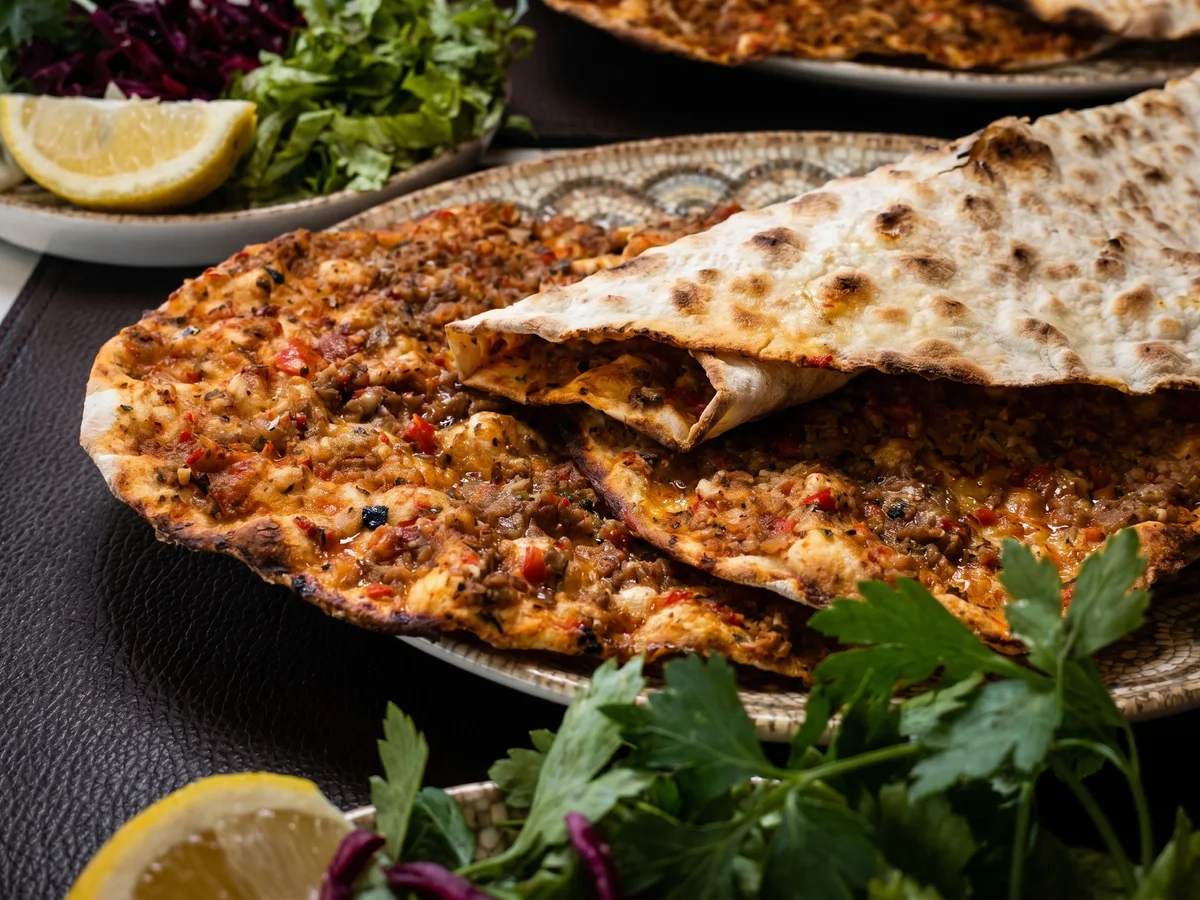
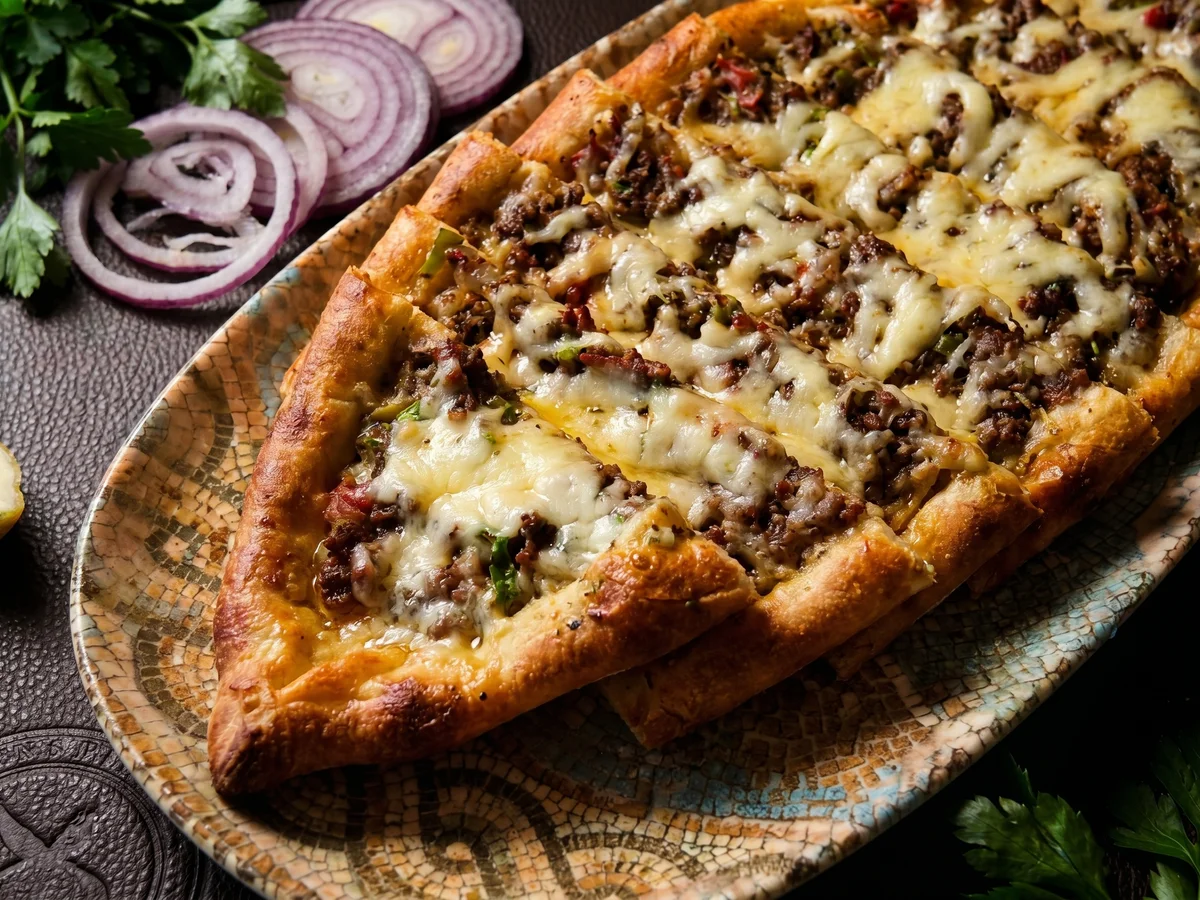
If you're a first-time visitor to Turkey and someone tells you to try pide, you might assume it's a Turkish version of pizza. It's not — pide is much older, the dough is thinner, the toppings are different, and the cooking method (a wood-fired stone oven) gives it a unique texture. This guide is for travelers, expats, and food-curious readers who want to understand pide before they order.
What Pide Is, Technically
Pide is a traditional Turkish flatbread, typically oval or boat-shaped, baked at very high heat (300–400°C / 570–750°F) in a stone-floored oven. The dough is brushed with butter or oil, topped with a savory filling, and baked in 3–5 minutes. The result has crispy charred edges and a soft middle.
The word "pide" derives from the Persian pita, which itself comes from the ancient Greek pēktos (something congealed). Variants of pide-style flatbreads exist across the Mediterranean and Middle East — Greek pita, Arabic khubz, Italian focaccia. Turkish pide is distinct in its open boat shape and use of melted butter and Turkish kashar cheese.
Pide vs Pizza: 5 Key Differences
- ●Shape: Pide is boat-shaped or oblong; pizza is round.
- ●Dough: Pide dough is leaner, with no olive oil dough enrichment. It's chewier and bakes drier.
- ●Base sauce: Pide has no tomato base. The flavor comes from butter, cheese, and meat directly.
- ●Cheese: Pide uses kashar (a semi-hard cow's milk cheese) instead of mozzarella.
- ●Cooking: Both can be wood-fired, but pide is baked at higher heat for shorter time.
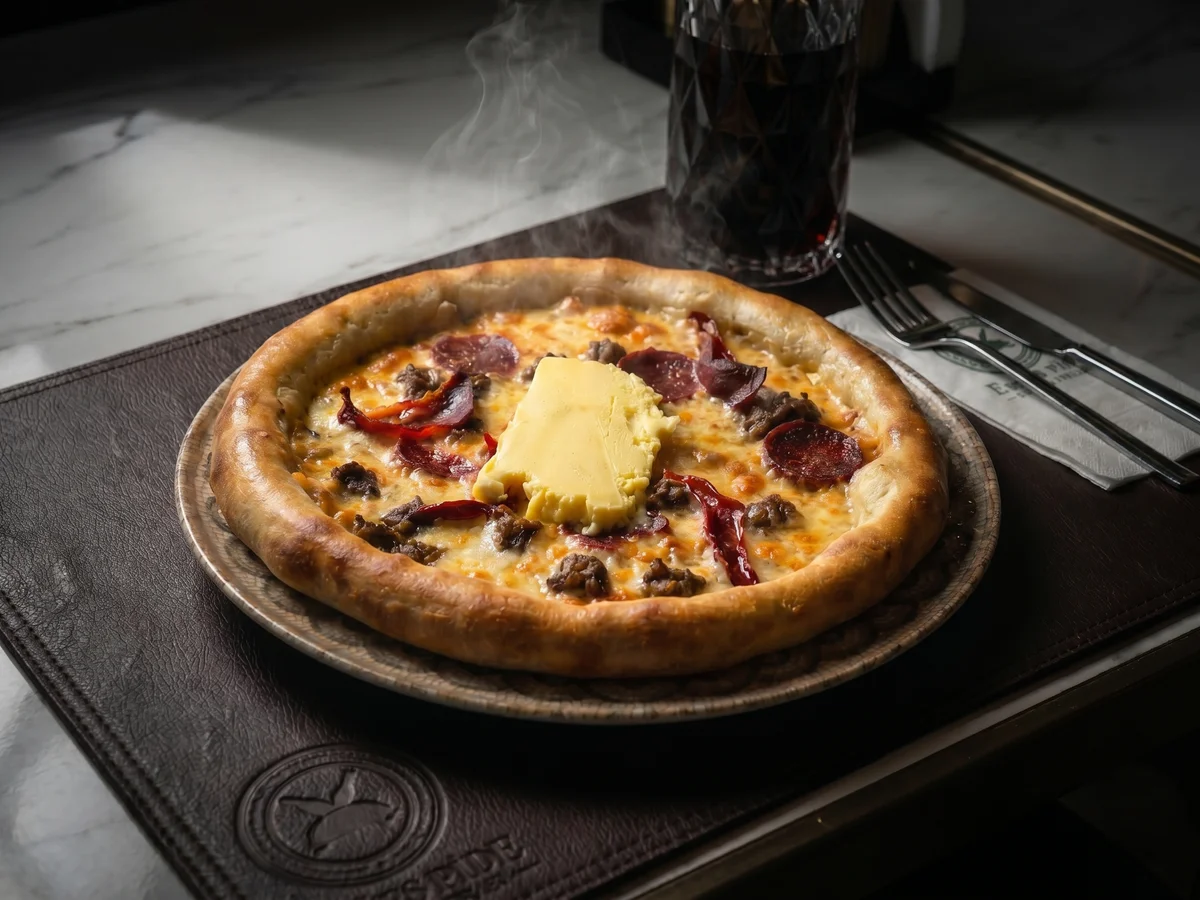
Regional Varieties Across Turkey
Pide changes character across the country. Each region adapts the dough and filling to local tastes:
- ●Black Sea / Trabzon: Open and closed (kapalı) forms dominate. Kavurma (slow-cooked beef confit), village cheese, and butter define the regional taste.
- ●Konya: The etli ekmek tradition — long, thin pide with spiced minced beef.
- ●Samsun: Higher ratio of closed pide than Trabzon; soft dough with intense fillings.
- ●Tokat: Round shape, often topped with an egg cracked over the filling.
- ●Kayseri: Doughy and dense; less common as a daily meal.
Common Pide Fillings
Pide can hold a surprisingly wide range of toppings. Here are the most commonly seen on Turkish menus:
- 01Kıymalı — spiced minced beef.
- 02Kıymalı kaşarlı — minced beef with melted kashar cheese.
- 03Kavurmalı kaşarlı — slow-cooked beef confit with kashar.
- 04Kuşbaşılı — cubed beef.
- 05Peynirli — cheese only (kashar + village cheese).
- 06Sucuklu — Turkish spiced beef sausage.
- 07Yumurtalı — with an egg cracked on top after baking.
- 08Pastırmalı — air-dried cured beef.
How to Eat Pide (No One Tells You This)
Pide is traditionally eaten with your hands. The restaurant will usually cut the pide into 2–3 cm slices crosswise before serving. Squeeze a wedge of lemon over the slices if it's the minced beef version. Pair with ayran (salty yogurt drink), not water, and definitely not soda — the dairy cuts through the butter and balances the meal.
Tags
#whatispide#Turkishpide#Turkishflatbread#pidevspizza#Turkishfood#Anatoliancuisine