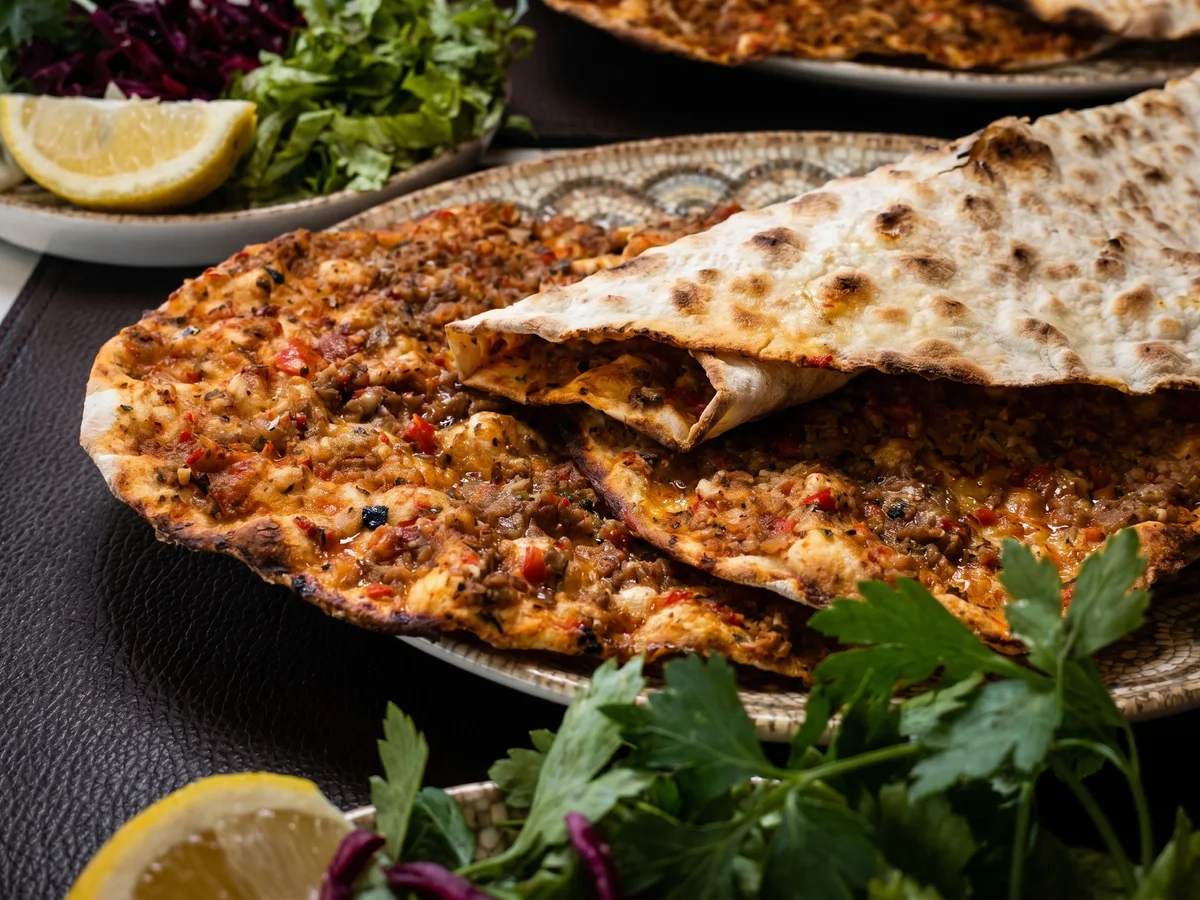

Walk past any traditional Turkish bakery in the Black Sea region and you'll smell it: burning wood, hot stone, and bread crust. That smell is the signature of pide done right. Stone-oven pide is not a marketing slogan — it's a measurable cooking method that produces something genuinely different from an electric or gas-fired oven.
What Is a Stone Oven?
A traditional stone oven (Turkish: taş fırın) is a brick or stone-built dome heated by burning hardwood — typically oak, hornbeam, or beech — directly inside the oven chamber. After 60–90 minutes, the embers are pushed aside, and the stone floor is ready: hot enough to char a piece of paper in seconds.
The dough touches the stone floor directly. The heat transfers by contact — not by circulating hot air, the way electric ovens work. That direct contact creates an instant crust on the bottom of the pide. The hot dome above radiates heat downward, finishing the toppings.
Why Stone Ovens Make Better Pide
- 01Higher peak temperature. Stone ovens reach 380–400°C. Most home ovens cap at 250°C. That extra heat is what creates the charred edge.
- 02Thermal mass. The stone floor stays at temperature even when the oven door opens. Electric ovens drop heat as soon as you open them.
- 03Contact cooking. The bottom of the dough gets hit with intense heat the instant it touches stone — producing a crispy base while the middle stays soft.
- 04Wood smoke aroma. Even when the embers are pushed aside, residual smoke flavors the pide gently. Electric ovens can't replicate this.
- 05Speed. A pide that takes 12 minutes in a home oven cooks in 3 minutes here — meaning the dough doesn't dry out.
Which Wood to Use?
Traditional Trabzon bakers use a mix of:
- ●Oak (meşe): Long burn, very high heat. Adds deep caramel notes to the crust.
- ●Hornbeam (gürgen): Burns fast and hard. Used for the initial intense heat-up.
- ●Beech (kayın): Moderate burn, soft aroma. Good for sustained baking.
- ●Hazel branches (fındık dalı): Distinctly Black Sea — adds a light nutty aroma. Reserved for special days.
The wood must be at least 6 months kiln- or air-dried. Wet wood produces excessive smoke and harsh carbon flavors that ruin the pide.
How to Spot Real Stone-Oven Pide
Restaurants sometimes claim "stone oven" while actually using gas or electric ovens with a stone tray. Here's how to tell the difference:
- ●Look for an open kitchen with a visible wood fire glowing inside the oven.
- ●The pide should arrive at your table with small charred spots on the bottom (Maillard reaction at high contact heat).
- ●The edges should be crispy enough to crack with your fingers, not just slightly hard.
- ●There should be a faint smell of wood smoke on the bread.
Tags
#stoneovenpide#wood-firedpide#traditionalpideTrabzon#Turkishstoneoven#BlackSeacuisine